
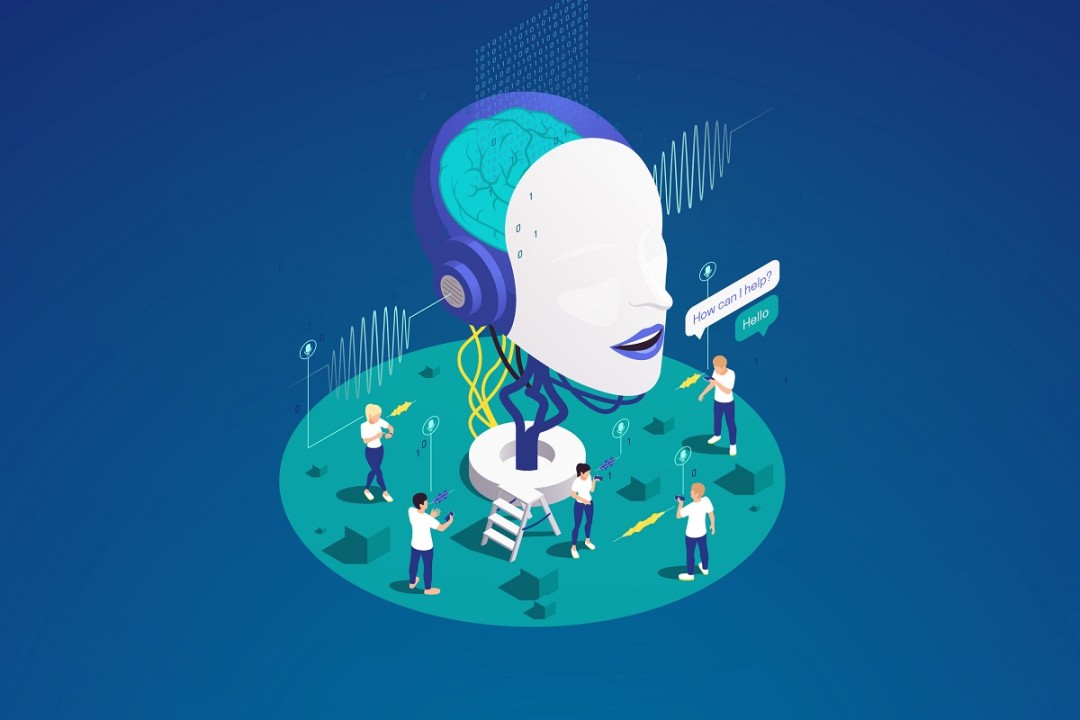
Machine learning enables computers to learn from data and improve performance without explicit programming for every scenario, transforming industries from healthcare to finance to entertainment. Unlike traditional software following predetermined rules, machine learning models identify patterns in vast datasets, making predictions and decisions based on learned relationships. The technology has progressed from academic research to practical deployment solving concrete business problems and enhancing consumer experiences. Applications range from email spam filtering to personalized recommendations to autonomous vehicle navigation. Understanding machine learning fundamentals, capabilities, and limitations helps organizations identify appropriate use cases while managing expectations about what current technology can realistically achieve.
Supervised Learning and Classification Tasks
Image recognition models trained on millions of labeled photographs now identify objects, faces, and scenes with accuracy surpassing human capabilities in many contexts, powering applications from photo organization to medical imaging analysis. Natural language processing enables sentiment analysis determining whether customer reviews express positive or negative opinions, helping companies monitor brand perception and identify service issues. Fraud detection systems analyze transaction patterns flagging suspicious activity for investigation, adapting to evolving criminal tactics through continuous learning from new fraud examples. Credit scoring models evaluate loan default risk based on historical data, though raising fairness concerns when training data contains historical biases. Medical diagnosis assistance analyzes symptoms, test results, and medical images suggesting potential conditions for physician consideration, though requiring human expertise for final decisions. Predictive maintenance forecasts equipment failures before they occur based on sensor data patterns, reducing downtime and maintenance costs in manufacturing and transportation. Speech recognition converts spoken words to text enabling voice assistants and transcription services, with accuracy improving dramatically through deep learning approaches.
Unsupervised Learning and Pattern Discovery
Customer segmentation clusters consumers into groups with similar characteristics enabling targeted marketing and personalized experiences without predefined categories, discovering natural groupings in data. Anomaly detection identifies unusual patterns potentially indicating fraud, equipment malfunction, or security breaches, essential for monitoring complex systems. Recommendation systems suggest products, content, or connections based on behavior patterns and similarity to other users, driving engagement and sales for platforms from streaming services to e-commerce. Dimensionality reduction simplifies complex datasets while preserving important patterns, enabling visualization and analysis of high-dimensional data impossible to comprehend directly. Topic modeling discovers themes in large document collections without manual categorization, useful for organizing research papers, news articles, or customer feedback. Association rule learning finds relationships between items frequently occurring together, informing product placement and bundle pricing strategies in retail. However, unsupervised learning lacks the clear accuracy metrics of supervised approaches, requiring domain expertise to evaluate whether discovered patterns prove meaningful or merely statistical artifacts.
Challenges and Ethical Considerations
Data quality and quantity requirements pose significant challenges, as models need substantial relevant examples to learn effectively, with poor quality data producing unreliable results. Bias in training data perpetuates and amplifies societal inequities when models learn discriminatory patterns present in historical records, requiring careful attention to fairness and representativeness. Model interpretability remains limited for complex neural networks, creating “black box” systems where even developers cannot fully explain specific predictions, problematic for high-stakes decisions requiring justification. Overfitting occurs when models memorize training data rather than learning generalizable patterns, performing poorly on new examples despite excellent training performance. Adversarial examples demonstrate vulnerability to carefully crafted inputs fooling models into confident incorrect predictions, raising security concerns for deployed systems. Privacy risks emerge when models inadvertently memorize sensitive training data, potentially exposing personal information through model queries. Computing resource requirements for training large models create environmental costs and concentrate capabilities among well-funded organizations. As machine learning deployment expands, responsible development practices considering accuracy, fairness, transparency, and societal impact become essential for building trust and ensuring technology benefits society broadly rather than creating new harms.